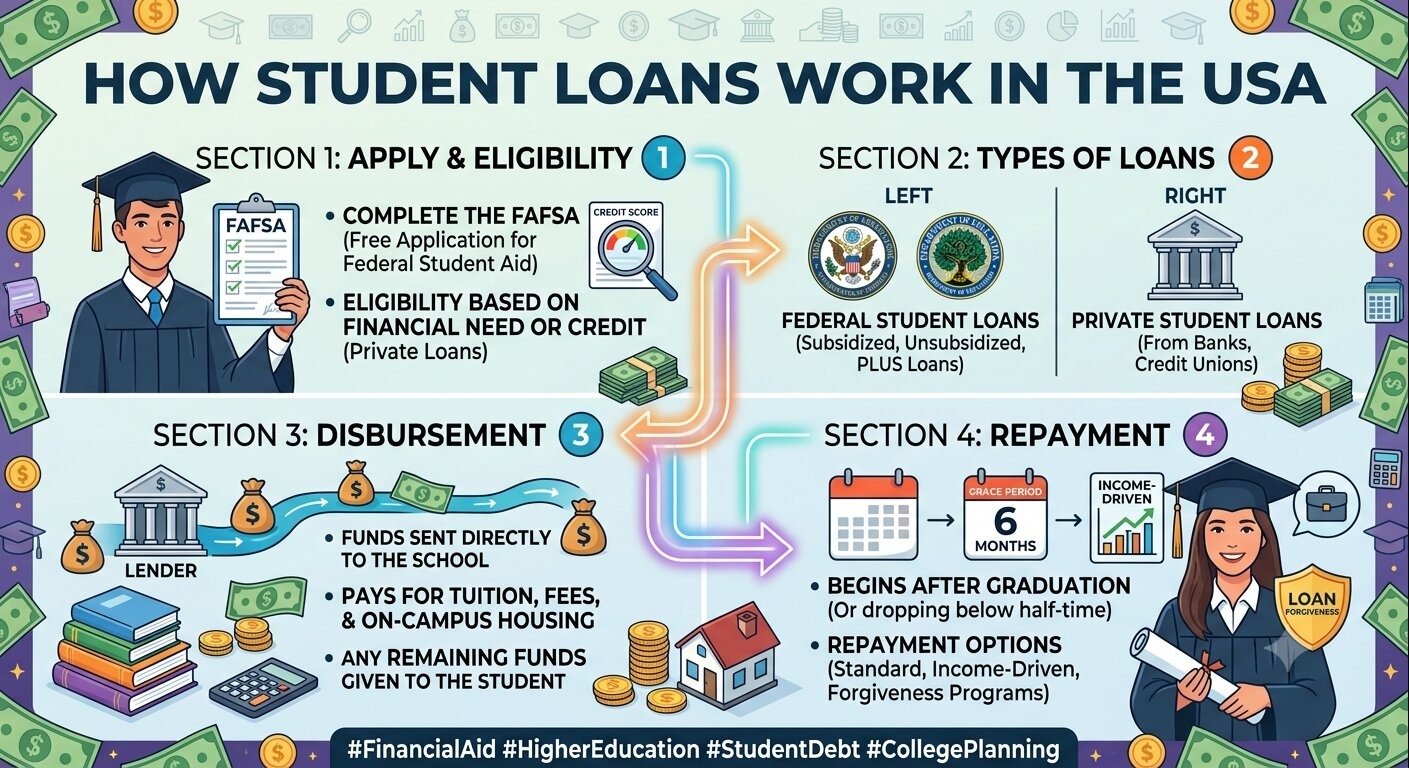
For many students, earning a college degree is one of the biggest investments they'll ever make. Tuition, housing, textbooks, meal plans, and other education expenses can quickly add up, making it difficult for families to pay everything out of pocket. That's where student loans come in.
Student loans allow students to borrow money to pay for higher education and repay it over time, often after graduation. While borrowing can make college more affordable today, it's important to understand how student loans work before signing any loan agreement.
In this guide, you'll learn the basics of student loans in the United States, the different types available, how repayment works, and practical tips for borrowing responsibly.
What Is a Student Loan?
A student loan is money borrowed to pay for qualified education expenses. Unlike scholarships or grants, student loans usually must be repaid with interest.
Students commonly use loans to cover:
- Tuition fees
- Housing and rent
- Meal plans
- Books and supplies
- Computers
- Transportation
- Other approved educational expenses
The goal is to make higher education more accessible while allowing borrowers to repay the cost over many years.
Student Loans at a Glance
| Feature | Simple Explanation |
|---|---|
| Purpose | Pay for college or other education expenses |
| Repayment | Usually begins after leaving school or graduating |
| Interest | May be fixed or variable depending on the loan |
| Loan Types | Federal and private student loans |
| Credit Check | Often not required for many federal loans |
| Typical Borrowers | Undergraduate, graduate, and professional students |
Understanding these basics helps students make informed borrowing decisions before enrolling.
Types of Student Loans
There are two main categories of student loans in the United States.
Federal Student Loans
Federal student loans are funded by the U.S. government and are generally considered the first option students should explore.
Common benefits include:
- Fixed interest rates
- Flexible repayment plans
- Income-driven repayment options
- Potential loan forgiveness programs
- Deferment and forbearance options
Many undergraduate students qualify without needing a credit check.
For a detailed comparison, read Federal vs Private Student Loans:
https://statush.com/credit-score-debt/federal-vs-private-student-loans
Private Student Loans
Private student loans are offered by:
- Banks
- Credit unions
- Online lenders
Approval usually depends on:
- Credit history
- Income
- Cosigner qualifications
Private loans may offer competitive rates for borrowers with excellent credit, but they often provide fewer borrower protections than federal loans.
How Does a Student Loan Work?
The borrowing process typically follows these steps.
Step 1: Apply for Financial Aid
Students usually begin by completing financial aid applications to determine eligibility for grants, scholarships, work-study opportunities, and federal student loans.
Step 2: Receive Loan Offer
After reviewing financial aid eligibility, the school provides a financial aid package that may include student loans.
Students can choose to accept all, part, or none of the offered loans.
Step 3: Funds Are Sent to the School
Loan funds are generally sent directly to the college or university.
The school first pays:
- Tuition
- Required fees
- Campus housing (if applicable)
Any remaining money may be refunded to the student for approved education expenses.
Step 4: Graduate or Leave School
Many federal student loans don't require immediate repayment while you're enrolled at least half-time.
Repayment usually begins after graduation or after leaving school, following any applicable grace period.
Real-World Example
Emma enrolls in a four-year university with annual education costs of $24,000.
She receives:
- A scholarship covering $8,000
- Family support of $6,000
- A federal student loan for the remaining amount
Instead of paying the entire cost upfront, Emma focuses on completing her education. After graduation, she begins repaying her student loan through affordable monthly payments while working full-time.
This approach allows her to invest in her education while spreading the cost over several years.
Understanding Interest
Like most loans, student loans may charge interest.
Interest is the cost of borrowing money.
Some loans begin accumulating interest immediately, while others may have special rules depending on the loan type and enrollment status.
The lower the interest rate, the less you'll generally pay over the life of the loan.
Learn more in How Interest Works on Loans:
https://statush.com/credit-score-debt/how-interest-works-on-loans
When Does Repayment Begin?
Repayment depends on the type of loan.
Many federal student loans include a grace period after graduation before monthly payments begin.
Private lenders may have different repayment rules.
Some borrowers begin making payments while still in school, while others wait until after graduation.
To better understand your options, read:
How Student Loan Repayment Plans Work
https://statush.com/credit-score-debt/how-student-loan-repayment-plans-work
Advantages of Student Loans
Student loans provide several important benefits.
- Help students afford higher education
- Allow costs to be spread over many years
- Federal loans offer flexible repayment options
- Some federal programs offer loan forgiveness opportunities
- Building an education may increase future earning potential
For many students, borrowing responsibly makes attending college possible.
Potential Drawbacks
Student loans also come with responsibilities.
Some disadvantages include:
- Interest increases total repayment costs
- Monthly payments after graduation
- Long repayment periods
- Missed payments may damage credit
- Borrowing too much can create financial stress
The key is borrowing only what's necessary.
Practical Tips Before Borrowing
Students can reduce future debt by following a few simple strategies.
- Apply for scholarships before borrowing.
- Accept grants whenever available.
- Borrow only what you actually need.
- Consider community college for the first two years.
- Create a realistic budget.
- Understand every loan before accepting it.
- Keep track of total borrowing each year.
Small decisions during college can significantly reduce future repayment costs.
Common Mistakes to Avoid
Many students make borrowing mistakes that become expensive later.
Avoid these common errors:
- Borrowing the maximum amount available without a plan
- Ignoring interest rates
- Not understanding repayment terms
- Depending entirely on loans for living expenses
- Forgetting about future monthly payments
- Failing to compare federal and private loan options
Making informed choices early can lead to a healthier financial future after graduation.
Is a Student Loan Worth It?
For many students, a student loan is an investment in future earning potential. However, it's important to consider the expected return on that investment.
Before borrowing, think about:
- Your career goals
- Expected future income
- Total education costs
- Monthly repayment obligations
- Alternative funding sources
Borrowing for an education that leads to stable career opportunities may make financial sense, but responsible borrowing remains essential.
Final Thoughts
Student loans have helped millions of Americans pursue higher education and build successful careers. When used wisely, they provide access to opportunities that might otherwise be out of reach.
Before accepting any student loan, understand how it works, compare federal and private options, estimate your future monthly payments, and borrow only what you truly need. A thoughtful borrowing strategy today can make repayment much easier after graduation.
To continue learning, explore the articles below for a deeper understanding of student loan options, repayment plans, and loan forgiveness programs.
Related Articles
- Federal vs Private Student Loans
https://statush.com/credit-score-debt/federal-vs-private-student-loans - How Student Loan Repayment Plans Work
https://statush.com/credit-score-debt/how-student-loan-repayment-plans-work - Student Loan Forgiveness Programs Explained
https://statush.com/credit-score-debt/student-loan-forgiveness-programs-explained - How to Consolidate Student Loans
https://statush.com/credit-score-debt/how-to-consolidate-student-loans - How Interest Works on Loans
https://statush.com/credit-score-debt/how-interest-works-on-loans