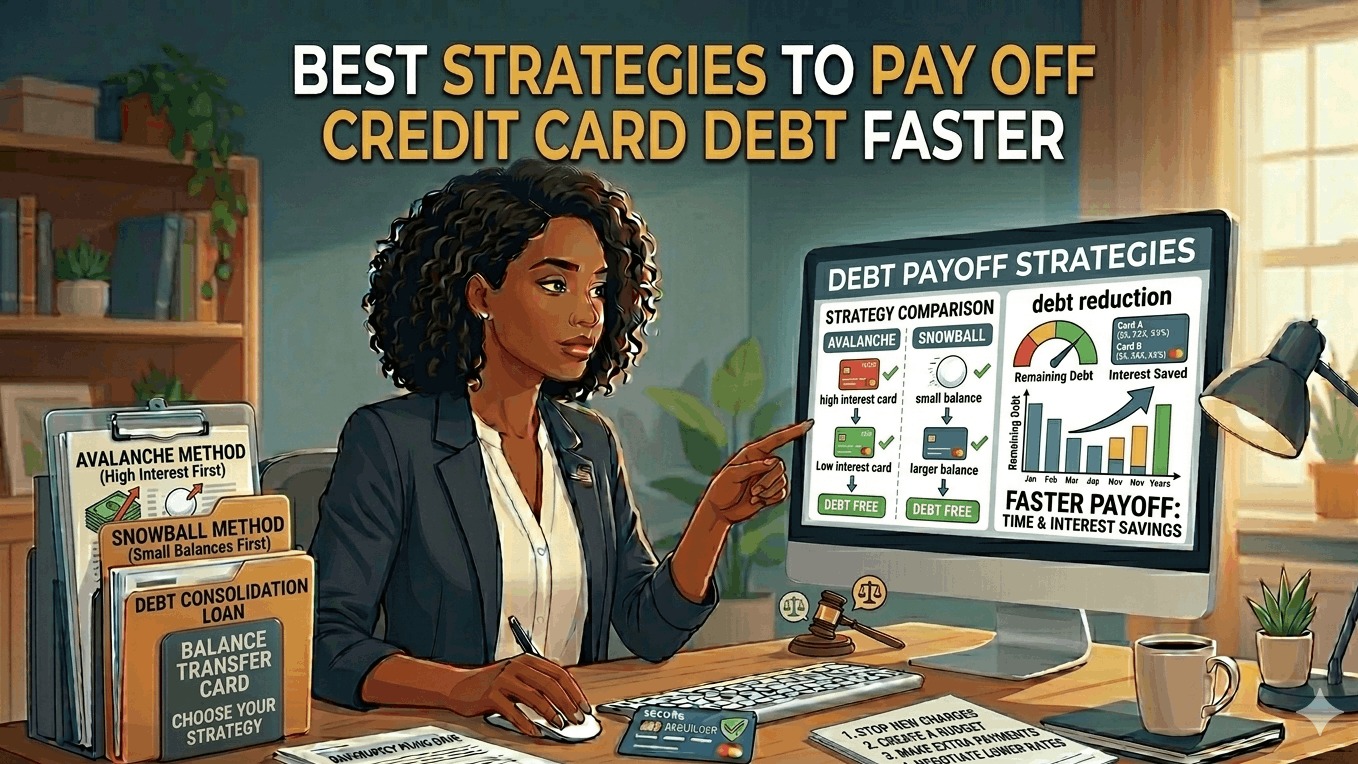
In 2026, the average U.S. household carries roughly $11,000 in credit card debt. With interest rates hovering around 22.8%, paying only the minimum can trap you in a cycle of debt for decades. To get out faster, you need a strategy that targets interest costs and leverages psychological momentum.
Here are the most effective strategies for the 2026 financial climate.
1. The Debt Avalanche (Mathematically Fastest)
This strategy is designed to save you the maximum amount of money on interest.
- The Method: List all your cards by interest rate, from highest to lowest. Make minimum payments on everything except the card with the highest APR. Put every extra dollar toward that top card.
- Why it works: By killing the most "expensive" debt first, you reduce the total interest accruing across your portfolio every day.
- Best for: Analytical thinkers and those with large balances on high-interest cards.
2. The Debt Snowball (Psychologically Motivating)
If you feel overwhelmed by the number of bills you have, this strategy provides the "quick wins" needed to stay focused.
- The Method: List your cards by balance size, from smallest to largest. Ignore the interest rates. Attack the smallest balance with all your extra cash while paying minimums on the rest.
- Why it works: Crossing a debt off your list entirely provides a dopamine hit that keeps you motivated for the larger hurdles ahead.
- Best for: Those who need to see immediate progress to stay committed.
3. The 0% Balance Transfer (The 2026 "Interest Pause")
In early 2026, lenders have introduced competitive 0% APR offers lasting 15 to 21 months.
- The Move: Transfer your high-interest balances to a new card with a 0% introductory rate.
- The Catch: You will usually pay a 3% to 5% transfer fee, but this is often much cheaper than six months of 22% interest.
- The Strategy: Divide your total balance by the number of 0% months (e.g., $3,000 / 15 months = $200/month). Stick to this payment strictly to be debt-free before the interest kicks back in.
4. Debt Consolidation Loans
If your credit score is still in the "Good" range (670+), you can swap high-interest "revolving" debt for a lower-interest "installment" loan.
- The Benefit: You move multiple credit card bills into one fixed monthly payment. In 2026, personal loan rates for good credit often range from 8% to 15%—significantly lower than the 22%+ on cards.
- The Risk: Once your credit cards are at a $0 balance, do not use them again. Many people consolidate their debt only to run the credit card balances back up, doubling their total debt.
5. Non-Profit Debt Management Plans (DMP)
If you can't qualify for a loan and the "DIY" methods aren't enough, look for a non-profit credit counseling agency (like NFCC or Money Management International).
- How it works: They negotiate directly with your banks to lower your interest rates (often to single digits) and waive fees. You make one payment to the agency, and they pay your creditors.
- The Impact: Your accounts will be closed, which may cause a temporary dip in your credit score, but you will pay off the full principal much faster and for less money.