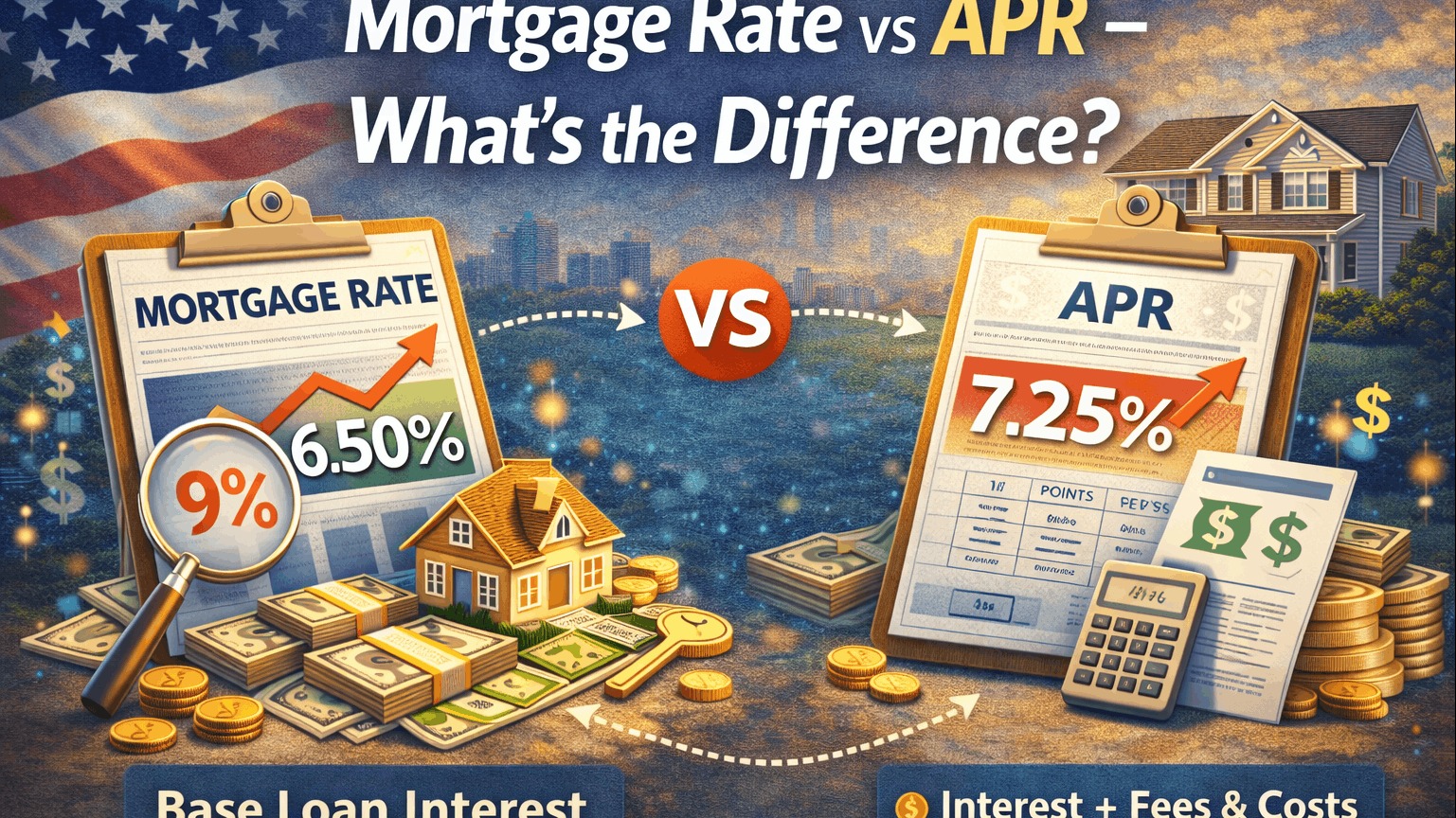
When you’re shopping for a home loan in 2026, you’ll likely notice two different percentages on every lender’s quote: the Interest Rate and the APR. While they look similar, understanding the gap between them can save you thousands of dollars over the life of your loan.
In the current market—where 30-year fixed rates are hovering around 6.1%—the "spread" between these two numbers is the key to identifying which lender is actually offering the best deal.
1. What is the Mortgage Interest Rate?
The interest rate is the base cost of borrowing the principal amount for your home. It is the percentage the lender charges you annually to use their money.
- What it determines: Your monthly principal and interest payment.
- What it ignores: It does not account for any of the other costs associated with getting the loan.
- 2026 Context: If you see a "6.0% Interest Rate," that is the raw math used to calculate your monthly check to the bank.
2. What is the APR (Annual Percentage Rate)?
The APR is a broader measure of the cost of your mortgage. It includes the interest rate plus the additional fees and costs required to close the loan. Think of it as the "all-in" or "effective" interest rate.
Under the Federal Truth in Lending Act, every consumer mortgage lender is required to disclose the APR so that borrowers can make an apples-to-apples comparison.
What’s Included in the APR?
- Discount Points: Fees you pay upfront to lower your interest rate.
- Origination Fees: The "paperwork" fee the lender charges to process the loan.
- Mortgage Insurance: Such as PMI or FHA mortgage insurance premiums.
- Certain Closing Costs: Fees like processing, underwriting, and document preparation.
3. The Comparison: Why the APR is Usually Higher
The APR will almost always be higher than the interest rate because it folds those upfront costs into a yearly percentage.
| Feature | Interest Rate | APR |
|---|---|---|
| Primary Purpose | Calculates monthly payment | Shows total cost of credit |
| Includes Fees? | No | Yes |
| Standardized? | No | Yes (Federal Requirement) |
| Best For... | Budgeting monthly cash flow | Comparing different lenders |
Example Scenario (March 2026)
Imagine you are comparing two lenders for a $400,000 loan:
- Lender A: 6.0% Interest Rate | 6.25% APR
- Lender B: 5.9% Interest Rate | 6.45% APR
In this case, Lender B has a lower interest rate, but their high fees make the loan more expensive overall. Lender A is actually the cheaper option over the long term.
4. When the APR Can Be Misleading
While the APR is a great comparison tool, it has one major flaw: It assumes you will keep the loan for the full term (usually 30 years).
If you plan to sell the house or refinance in 3 to 5 years, a loan with a lower interest rate and higher upfront fees (higher APR) might actually be more expensive than a loan with a slightly higher interest rate and zero fees.