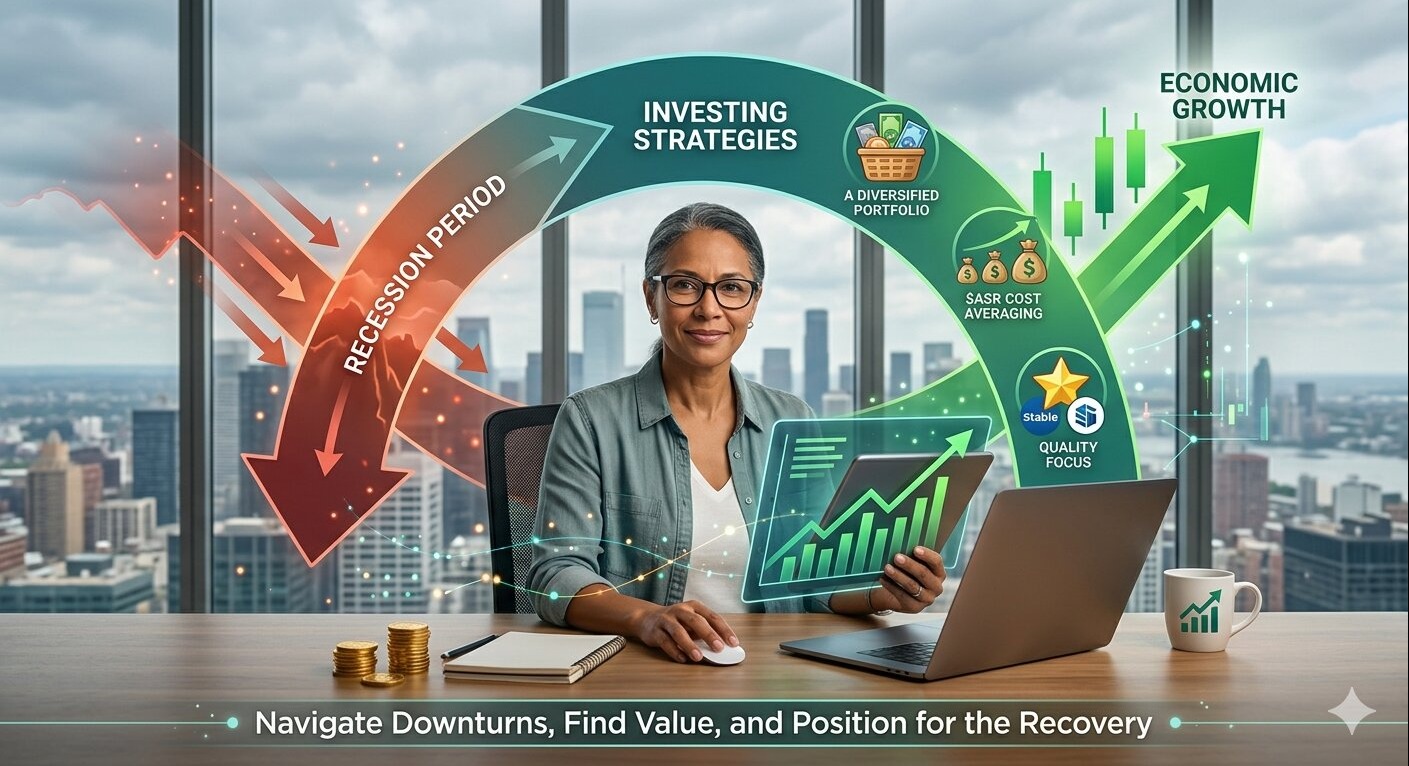
Recessions are one of the most emotionally difficult periods for investors. Markets become volatile, headlines turn negative, unemployment concerns rise, and fear spreads quickly across financial media.
For beginners especially, recessions can feel like the worst possible time to invest.
But interestingly, many experienced long-term investors view recessions differently. Instead of seeing only danger, they also recognize opportunity.
That does not mean recessions are easy or risk-free. Companies can struggle, stock prices may fall sharply, and uncertainty often lasts longer than expected. However, history shows that markets have repeatedly recovered from economic downturns over time.
Understanding how to invest during recessions can help investors make calmer, more disciplined decisions instead of reacting emotionally during difficult periods.
What Is an Economic Recession?
A recession is a period of economic slowdown characterized by declining economic activity.
Common recession indicators include:
- Slower economic growth
- Rising unemployment
- Reduced consumer spending
- Declining business profits
- Lower industrial production
Recessions vary in severity.
Some are relatively mild, while others become major financial crises.
Examples include:
- The 2008 financial crisis
- The 2020 pandemic recession
- Inflation-driven economic slowdowns
During recessions, stock markets often decline because investors become concerned about future corporate earnings and economic conditions.
Why Markets Fall During Recessions
Stock markets are forward-looking.
Investors try to predict future business performance rather than focus only on current conditions.
During recessions:
- Companies may earn lower profits
- Consumers often spend less
- Businesses reduce expansion plans
- Economic uncertainty increases
This uncertainty can cause:
- Stock price declines
- Increased volatility
- Investor panic selling
However, markets also tend to recover before the economy fully improves.
That part surprises many beginners.
Emotional Investing Becomes Dangerous
One of the biggest investing mistakes during recessions is emotional decision-making.
Fear often causes investors to:
- Panic sell during market declines
- Stop investing entirely
- Try timing the market
- Overreact to headlines
Unfortunately, emotional investing often locks in losses.
Many investors who sold during major market crashes later struggled to re-enter markets at the right time.
This is why emotional discipline matters so much during recessions.
You may also want to read How to Build a Long-Term Investment Strategy.
Focus on Long-Term Thinking
One important reality about investing is that recessions are normal.
Markets have historically experienced:
- Recessions
- Bear markets
- Financial crises
- Inflation shocks
- Political uncertainty
Yet over long periods, markets have generally recovered and continued growing.
Historical Perspective
| Crisis | Market Eventually Recovered? |
|---|---|
| 2008 Financial Crisis | Yes |
| 2020 Pandemic Crash | Yes |
| Dot-Com Crash | Yes |
This does not guarantee future performance, but history shows that markets have repeatedly survived major economic challenges.
Long-term investors often focus more on decades than months.
Continue Investing Consistently
Many investors stop investing during recessions because fear becomes overwhelming.
Ironically, recessions often create opportunities to buy quality investments at lower prices.
This is one reason many investors continue using dollar-cost averaging during downturns.
Dollar-Cost Averaging
Dollar-cost averaging means investing fixed amounts regularly regardless of market conditions.
For example:
- Invest monthly
- Continue during market declines
- Buy more shares when prices fall
This strategy helps reduce emotional market timing decisions.
Example
| Market Condition | Shares Purchased |
|---|---|
| Higher prices | Fewer shares |
| Lower prices | More shares |
Over long periods, this can improve average purchase prices.
Focus on Financially Strong Companies
During recessions, weaker companies often struggle the most.
This is why many investors prioritize financially strong businesses during economic downturns.
Important qualities may include:
- Strong balance sheets
- Stable cash flow
- Manageable debt
- Consistent earnings
- Durable competitive advantages
Blue-chip companies often receive more attention during recessions because investors value stability.
You may also enjoy reading How to Invest in Blue-Chip Stocks.
Defensive Sectors During Recessions
Certain industries tend to hold up better during economic slowdowns.
These are often called defensive sectors.
Common Defensive Industries
| Sector | Why It May Hold Up Better |
|---|---|
| Healthcare | Demand remains relatively stable |
| Consumer staples | People still buy essentials |
| Utilities | Essential services continue |
| Dividend stocks | Income-focused investments |
People continue buying:
- Food
- Healthcare
- Household products
- Electricity
even during recessions.
Defensive sectors may experience lower volatility compared to highly cyclical industries.
Diversification Matters Even More
Recessions remind investors why diversification is so important.
Concentrated portfolios can become extremely risky during economic stress.
Diversified portfolios may include:
- Stocks
- Bonds
- International investments
- Dividend stocks
- Defensive sectors
Diversification helps reduce reliance on one area of the market.
You may also want to read Portfolio Diversification Strategies.
Bonds and Recession Investing
Bonds often become more attractive during uncertain economic periods because they may provide:
- Stability
- Income
- Lower volatility
While bonds are not risk-free, they sometimes help reduce overall portfolio fluctuations during recessions.
Conservative investors often increase bond exposure during uncertain periods.
You can learn more in How to Invest in Bonds for Beginners.
Dividend Investing During Recessions
Dividend-paying companies may help investors remain calmer during downturns because dividends continue generating income even when stock prices decline.
Benefits may include:
- Passive income
- Dividend reinvestment opportunities
- Psychological stability
However, investors should still evaluate dividend sustainability carefully because some companies may reduce payouts during severe recessions.
You may also enjoy reading Dividend Yield vs Dividend Growth Investing.
Avoid Trying to Perfectly Time the Market
Many investors attempt to:
- Sell before recessions worsen
- Buy back at the exact bottom
The problem is that timing markets consistently is extremely difficult.
Markets often rebound unexpectedly while economic news still looks negative.
Missing just a few strong recovery days can significantly reduce long-term returns.
Long-term consistency usually works better than trying to predict every market move perfectly.
Keep Emergency Savings Separate
One major mistake investors make during recessions is investing money they may urgently need soon.
Emergency funds matter greatly because recessions can affect:
- Employment
- Business income
- Financial stability
Investors should avoid taking excessive risk with short-term financial needs.
A strong emergency fund helps investors avoid panic-selling investments during difficult periods.
Rebalancing During Recessions
Market declines can significantly change portfolio allocations.
For example:
- Stocks decline sharply
- Bond allocation rises automatically
Rebalancing helps restore target portfolio allocations.
Example
| Asset | Original Allocation | New Allocation |
|---|---|---|
| Stocks | 70% | 55% |
| Bonds | 30% | 45% |
Rebalancing may involve buying undervalued assets while maintaining diversification.
Recessions Can Create Long-Term Opportunities
Many strong long-term investments were purchased during periods of fear and uncertainty.
Why?
Because recessions sometimes create:
- Lower stock prices
- Attractive valuations
- Reduced market optimism
Long-term investors often focus on:
- Business quality
- Financial strength
- Long-term growth potential
rather than short-term panic.
You may also want to read Fundamental Analysis for Beginner Investors.
Common Recession Investing Mistakes
Panic Selling
Fear-driven selling often locks in losses.
Stopping Investments Entirely
Some investors stop investing during downturns and miss recovery opportunities.
Concentrating in Risky Assets
Speculative investments may become especially dangerous during recessions.
Ignoring Risk Tolerance
Aggressive portfolios may become emotionally difficult during severe downturns.
Final Thoughts
Investing during recessions can feel uncomfortable, but difficult markets are a normal part of long-term investing.
Successful recession investing usually focuses on:
- Emotional discipline
- Diversification
- Long-term thinking
- Financially strong businesses
- Consistent investing
- Risk management
Recessions may create fear in the short term, but they also remind investors why patience and discipline matter so much.
In many ways, long-term investing success is not about avoiding every market decline. It is about staying rational, diversified, and consistent while markets move through difficult economic cycles over time.