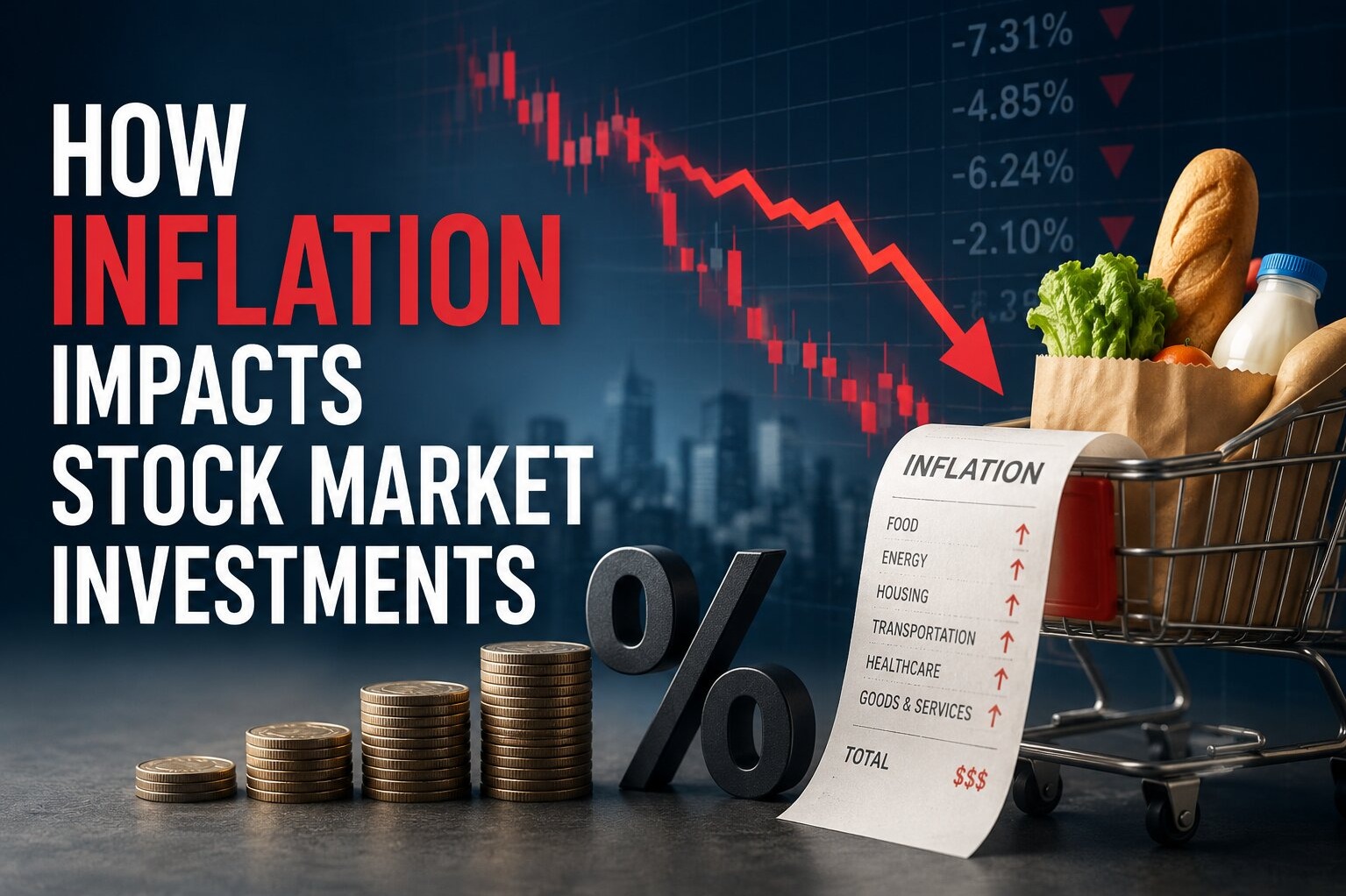
Inflation is one of those economic terms investors hear constantly, especially during periods of rising prices and market volatility. News headlines talk about inflation almost daily when economies become unstable, interest rates rise, or consumer costs increase sharply.
But many beginner investors still wonder:
- What exactly is inflation?
- Why does it affect the stock market?
- Which investments perform better during inflation?
- How should investors respond?
Understanding inflation matters because it influences almost every part of investing:
- Stock prices
- Interest rates
- Consumer spending
- Corporate profits
- Bond performance
- Market sentiment
Inflation itself is not always bad. Moderate inflation is normal in growing economies. Problems usually begin when inflation rises too quickly or remains elevated for long periods.
For investors, inflation changes the environment markets operate within, which is why learning how it works can improve long-term investing decisions.
What Is Inflation?
Inflation refers to the gradual increase in prices over time.
As inflation rises:
- Goods become more expensive
- Services cost more
- Purchasing power declines
For example:
- Groceries become more expensive
- Rent increases
- Fuel prices rise
- Utility bills grow
This means the same amount of money buys fewer goods and services over time.
Simple Inflation Example
| Year | Cost of Product |
|---|---|
| 2020 | $100 |
| 2025 | $125 |
Inflation reduced purchasing power because the product became more expensive.
Why Inflation Happens
Inflation can occur for several reasons.
Demand-Pull Inflation
This happens when consumer demand rises faster than supply.
For example:
- Strong economy
- High consumer spending
- Businesses struggle to meet demand
Prices rise because demand exceeds available supply.
Cost-Push Inflation
This occurs when production costs increase.
Examples include:
- Rising labor costs
- Higher energy prices
- Supply chain disruptions
Businesses often pass those higher costs to consumers.
Monetary Inflation
Inflation may also increase when excessive money enters the economy.
Lower interest rates and stimulus policies can sometimes contribute to rising inflation over time.
Why Inflation Matters for Investors
Inflation affects investments because it changes both:
- Economic conditions
- Investor behavior
High inflation can:
- Reduce consumer spending power
- Increase business expenses
- Pressure corporate profits
- Lead to higher interest rates
This often creates uncertainty in financial markets.
Inflation and Purchasing Power
One major reason investors care about inflation is purchasing power erosion.
If investments fail to outpace inflation:
- Real wealth may decline over time
For example:
- Investment grows 4%
- Inflation rises 6%
Real purchasing power actually decreases.
Real Return Formula
\text{Real Return} = \text{Investment Return} - \text{Inflation Rate}
Example
| Investment Return | Inflation Rate | Real Return |
|---|---|---|
| 8% | 3% | 5% |
| 5% | 7% | -2% |
This is why long-term investors focus not only on returns, but also on inflation-adjusted growth.
How Inflation Impacts Stocks
Stocks react differently depending on:
- Inflation levels
- Interest rates
- Economic conditions
- Industry type
Moderate Inflation Can Support Markets
Moderate inflation often occurs alongside:
- Economic growth
- Strong employment
- Rising corporate earnings
In these environments, many companies can:
- Increase prices
- Maintain profitability
- Continue expanding
This may support stock market growth.
High Inflation Creates Challenges
Very high inflation can become problematic.
Why?
Because businesses face rising costs for:
- Labor
- Materials
- Transportation
- Operations
Consumers may also reduce spending as living expenses rise.
This can pressure:
- Revenue growth
- Profit margins
- Investor confidence
High inflation often increases market volatility.
Interest Rates and Inflation
Central banks often raise interest rates to fight inflation.
Higher interest rates can:
- Slow borrowing
- Reduce consumer spending
- Decrease business expansion
- Lower stock valuations
Growth stocks are often especially sensitive to rising rates because investors value them heavily based on future earnings expectations.
You may also enjoy reading Growth Stocks vs Value Stocks.
Which Investments Perform Better During Inflation?
Some investments historically handle inflation better than others.
Value Stocks
Value-oriented businesses often perform relatively better during inflationary periods because they may:
- Generate stable cash flow
- Trade at lower valuations
- Operate in mature industries
Dividend-paying companies may also become attractive because investors value income stability.
Commodity-Related Investments
Commodity-related sectors sometimes benefit from inflation.
Examples include:
- Energy companies
- Mining businesses
- Materials producers
This happens because rising commodity prices can increase profits in these industries.
Real Estate Investments
Real estate may provide inflation protection because:
- Property values may rise
- Rental income can increase over time
Some investors use REITs for real estate exposure within portfolios.
Defensive Sectors
Certain defensive industries often remain relatively stable during inflationary environments.
Examples include:
- Consumer staples
- Utilities
- Healthcare
People continue purchasing essential products and services even when prices rise.
Investments That May Struggle During Inflation
Some investments can face more pressure during high inflation periods.
Growth Stocks
Growth companies often rely heavily on future earnings expectations.
Higher interest rates reduce the present value of those future profits, which may pressure valuations.
Technology stocks sometimes experience larger volatility during rising-rate environments.
Bonds
Traditional bonds often struggle during inflation because:
- Fixed interest payments lose purchasing power
- Rising interest rates can reduce bond prices
Long-term bonds are often especially sensitive to inflation and interest-rate changes.
You may also want to read How to Invest in Bonds for Beginners.
Inflation-Protected Investments
Some investments are specifically designed to help manage inflation risk.
Inflation-Protected Bonds
Certain government bonds adjust based on inflation levels.
These investments aim to preserve purchasing power over time.
Dividend Growth Stocks
Companies that consistently increase dividends may help investors offset inflation through rising income.
You may enjoy reading:
Diversification Helps Manage Inflation Risk
Inflation affects different investments differently.
This is why diversification becomes important.
Balanced portfolios may include:
- Stocks
- Dividend investments
- International exposure
- Bonds
- Real assets
Diversification helps reduce dependence on one market environment.
You may also want to read Portfolio Diversification Strategies.
Emotional Investing During Inflation
Inflation often creates fear in financial markets because:
- Headlines become negative
- Interest rates rise
- Market volatility increases
This can lead investors to:
- Panic sell
- Abandon long-term plans
- Chase short-term trends
Emotional investing during inflationary periods often creates unnecessary mistakes.
Long-term discipline remains important even during difficult economic environments.
Long-Term Investors Focus on Real Returns
Experienced investors often think beyond short-term inflation spikes.
Instead, they focus on:
- Long-term compounding
- Business quality
- Pricing power
- Portfolio diversification
- Real purchasing power growth
Historically, stocks have generally outpaced inflation over long periods, although short-term volatility can still become significant.
You may also enjoy reading How to Invest During Economic Recessions.
Common Inflation Investing Mistakes
Holding Too Much Cash
Cash loses purchasing power during inflationary periods.
Chasing Hype Investments
Fear often pushes investors toward speculative “inflation-proof” assets without proper research.
Ignoring Diversification
Concentrated portfolios become more vulnerable during changing economic conditions.
Overreacting to Short-Term Headlines
Inflation data changes constantly, and markets often react emotionally in the short term.
Final Thoughts
Inflation impacts stock market investments by influencing:
- Consumer behavior
- Corporate profits
- Interest rates
- Market valuations
- Investor sentiment
While inflation can create challenges, it is also a normal part of economic cycles.
Long-term investors often manage inflation risk through:
- Diversification
- Quality businesses
- Dividend growth
- Balanced portfolios
- Long-term discipline
No investment is completely immune to inflation, but understanding how inflation affects different assets can help investors make calmer and more informed decisions.
In many ways, successful investing during inflation is less about predicting every economic shift and more about maintaining a diversified strategy capable of adapting through changing market environments over time.