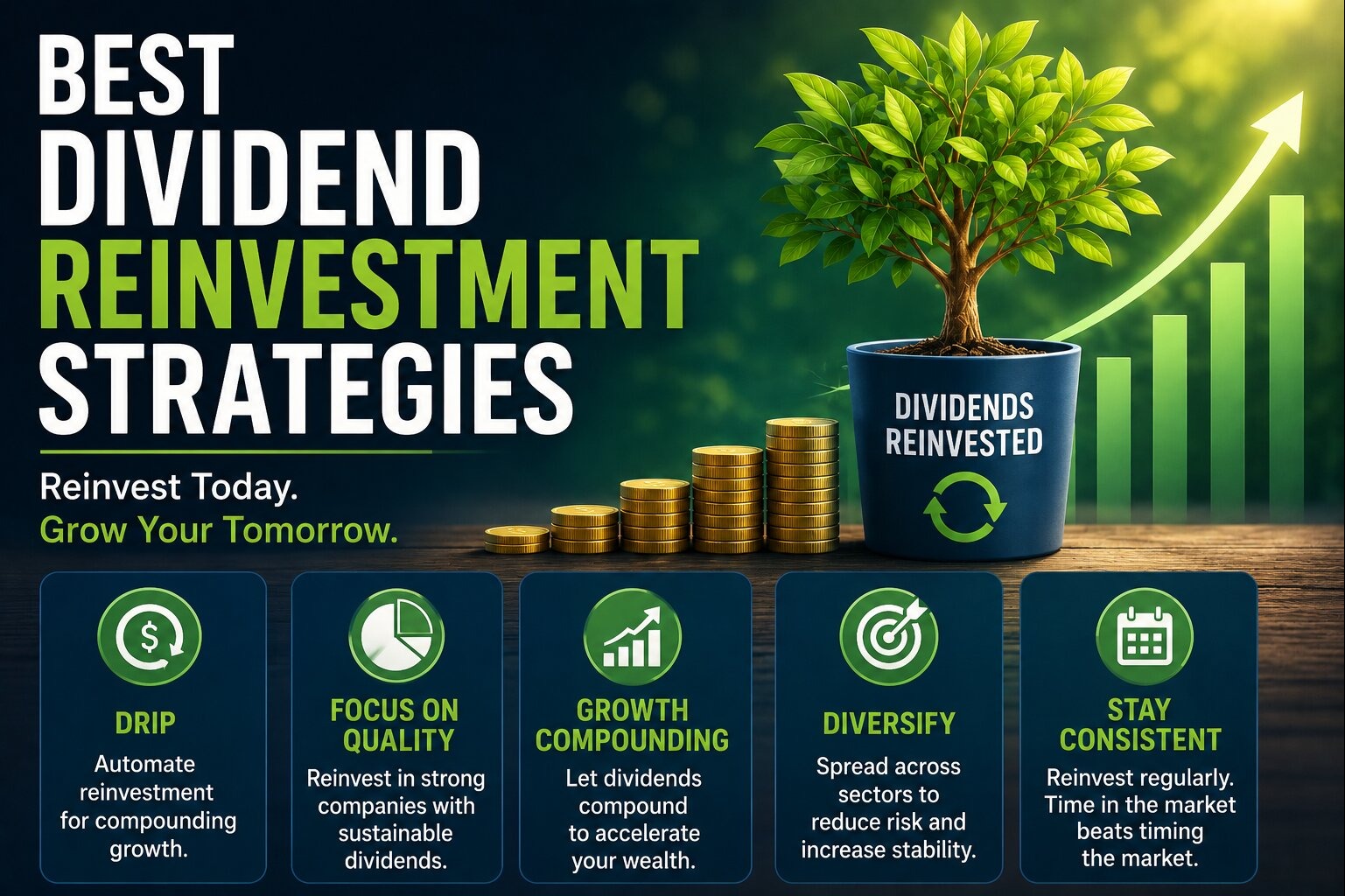
One of the most powerful parts of dividend investing is not just receiving dividends — it is what you do with those dividends afterward.
Some investors spend dividend income immediately. Others use it to buy more shares and grow their portfolios faster over time. That second approach is called dividend reinvestment, and it has helped many long-term investors build substantial wealth through compounding.
At first, reinvesting dividends may seem like a small decision. But over decades, it can dramatically increase portfolio growth.
In many ways, dividend reinvestment is where compounding truly starts becoming visible.
The strategy is especially popular among long-term investors because it allows portfolios to grow automatically without constantly adding large amounts of new money.
What Is Dividend Reinvestment?
Dividend reinvestment means using dividend payments to purchase additional shares instead of taking the cash as income.
For example:
- You own dividend-paying stocks
- The company pays quarterly dividends
- Instead of withdrawing the cash, the dividends buy more shares automatically
Those additional shares then generate even more dividends in the future.
That creates a compounding cycle.
Why Dividend Reinvestment Matters
Dividend reinvestment can significantly increase long-term portfolio growth.
Here is a simplified example:
| Year | Shares Owned | Annual Dividend Income |
|---|---|---|
| Year 1 | 100 Shares | $200 |
| Year 5 | 125 Shares | $300 |
| Year 10 | 165 Shares | $520 |
| Year 20 | 280 Shares | $1,450 |
Notice how dividend income accelerates over time.
This happens because:
- Reinvested dividends buy more shares
- More shares generate larger dividends
- Larger dividends purchase even more shares
That is the power of compounding.
You may also want to read How to Start Dividend Investing if you are still learning the basics.
DRIPs: Dividend Reinvestment Plans
Many companies and brokerages offer DRIPs, which stands for Dividend Reinvestment Plans.
These programs automatically reinvest dividends into additional shares.
Advantages of DRIPs
| Benefit | Why It Helps |
|---|---|
| Automation | Reduces emotional investing |
| Compounding | Accelerates long-term growth |
| Convenience | No manual reinvesting required |
| Fractional shares | Fully utilizes dividend payments |
DRIPs are popular because they make investing consistent and disciplined.
Honestly, automation is underrated in investing. Removing emotion often improves long-term decision-making.
Full Reinvestment Strategy
This is the simplest and most common reinvestment approach.
Investors reinvest:
- Every dividend
- Into the same stock or fund
- Continuously over many years
This strategy works especially well for:
- Younger investors
- Long investment timelines
- Retirement-focused portfolios
The longer the timeline, the more compounding can work.
Selective Reinvestment Strategy
Some investors prefer more flexibility.
Instead of automatically reinvesting into the same stock, they manually direct dividends toward:
- Undervalued stocks
- Better opportunities
- Portfolio rebalancing
- Diversification improvements
For example:
- Technology sector becomes too large
- Dividends get redirected into healthcare or bonds
This strategy requires more portfolio monitoring but may improve diversification and risk management.
If diversification is something you are actively working on, read Portfolio Diversification Strategies.
Reinvesting Into Dividend ETFs
Many investors prefer dividend ETFs instead of managing individual stocks.
Dividend ETFs offer:
- Diversification
- Lower company-specific risk
- Simpler portfolio management
Reinvesting ETF dividends can still create powerful compounding effects.
Popular dividend ETF categories include:
- High-yield ETFs
- Dividend growth ETFs
- Dividend aristocrat ETFs
If you are comparing fund structures, check out Index Fund vs ETF: Key Differences Explained.
Dollar-Cost Averaging With Dividends
Dividend reinvestment naturally supports dollar-cost averaging.
When markets decline:
- Dividend payments buy more shares
- Lower prices increase purchasing power
When markets rise:
- Portfolio value grows
This helps investors avoid emotional market timing decisions.
For example:
| Market Condition | Shares Purchased |
|---|---|
| High stock prices | Fewer shares |
| Lower stock prices | More shares |
Over long periods, this can smooth out average purchase costs.
You may also enjoy reading How to Build a Long-Term Investment Strategy.
Dividend Growth Reinvestment Strategy
Some investors specifically focus on companies that regularly increase dividends over time.
This creates two layers of growth:
- Growing share count through reinvestment
- Rising dividend payments from the company itself
That combination can become extremely powerful over decades.
Example
| Year | Dividend Per Share | Shares Owned | Total Dividend Income |
|---|---|---|---|
| Year 1 | $1.00 | 100 | $100 |
| Year 10 | $2.20 | 165 | $363 |
| Year 20 | $4.10 | 290 | $1,189 |
This is one reason dividend growth investing attracts many long-term investors.
You can explore this topic further in Dividend Yield vs Dividend Growth Investing.
Tax Considerations
Dividend reinvestment does not eliminate taxes in taxable accounts.
This part surprises many beginners.
Even when dividends are automatically reinvested:
- Dividends may still be taxable
- Capital gains tracking becomes important
This is why investors should understand:
- Qualified dividends
- Capital gains taxes
- Tax-efficient account structures
Retirement accounts often simplify this process because taxes may be deferred or reduced depending on the account type.
You may also want to read Tax-Efficient Investing Strategies.
Common Dividend Reinvestment Mistakes
Reinvesting Into Weak Companies
Not every dividend stock is a good long-term investment.
Some companies:
- Struggle financially
- Carry excessive debt
- Maintain unsustainable payouts
Automatically reinvesting into weak businesses can become risky.
This is why monitoring company quality still matters.
Learn more in How to Analyze Stocks Before Investing.
Ignoring Diversification
Some investors become overly concentrated in:
- One company
- One industry
- One dividend sector
For example:
- Utilities
- Energy
- REITs
- Financial stocks
Diversification remains important even for dividend-focused portfolios.
Chasing Extremely High Yields
Very high dividend yields may indicate:
- Financial distress
- Falling stock prices
- Potential dividend cuts
A sustainable dividend is usually more valuable than an unrealistic yield.
When Reinvestment May Not Be Ideal
Dividend reinvestment is powerful, but it is not always the best option.
Some investors may prefer cash dividends when:
- Retired and needing income
- Paying living expenses
- Funding other investments
- Managing portfolio risk
There is nothing wrong with using dividends as income if that aligns with your financial goals.
Investment strategies should support real-life financial needs, not just maximize portfolio growth numbers.
Long-Term Patience Is Essential
Dividend reinvestment works best over long periods.
The compounding effect often looks slow initially but accelerates significantly over time.
This is why patience matters so much.
An investor reinvesting dividends consistently for 20 or 30 years may experience dramatically different results compared to someone frequently buying and selling emotionally.
Long-term discipline usually matters more than chasing short-term excitement.
You may also enjoy reading How to Create a Passive Investment Portfolio.
Final Thoughts
Dividend reinvestment remains one of the most effective long-term wealth-building strategies because it combines:
- Passive income
- Compounding
- Automation
- Long-term portfolio growth
Whether you reinvest automatically through DRIPs or manually allocate dividends into new opportunities, the key is consistency.
The best dividend reinvestment strategies usually focus on:
- Quality companies
- Sustainable dividends
- Diversification
- Long-term patience
Reinvesting dividends may not feel exciting day to day, but over decades, small consistent reinvestments can create surprisingly large results.