Personal loans are one of the most popular borrowing options in the United States because they are flexible, relatively easy to understand, and can be used for almost any legitimate financial need. Whether you're consolidating debt, paying for a home improvement project, covering medical expenses, or handling an unexpected emergency, a personal loan can provide the funds you need upfront while allowing you to repay the balance over time.
However, not every personal loan is the same. Interest rates, repayment terms, fees, and approval requirements can vary significantly from one lender to another. Understanding how personal loans work before you apply can help you borrow wisely, reduce interest costs, and avoid unnecessary financial stress.
What Is a Personal Loan?
A personal loan is a type of installment loan where a lender gives you a fixed amount of money, known as the principal. You agree to repay that amount through equal monthly payments over a predetermined period, usually between two and seven years.
Unlike mortgages or auto loans, personal loans typically don't require you to spend the money on a specific purchase. Once the funds are deposited into your account, you can generally use them however you choose.
Personal Loan Basics
| Feature | Simple Explanation |
|---|---|
| Loan Amount | The total amount you borrow |
| Interest Rate | The cost of borrowing money |
| Monthly Payment | Fixed payment made every month |
| Loan Term | How long you have to repay the loan |
| Unsecured Loan | No collateral required |
| Secured Loan | Backed by an asset such as savings or a vehicle |
Most personal loans are unsecured, meaning you don't have to pledge your home or car as collateral. Because the lender assumes more risk, approval depends heavily on your credit profile and income.
If you're unfamiliar with the differences, read Secured vs Unsecured Loans:
https://statush.com/credit-score-debt/secured-vs-unsecured-loans
How Does a Personal Loan Work?
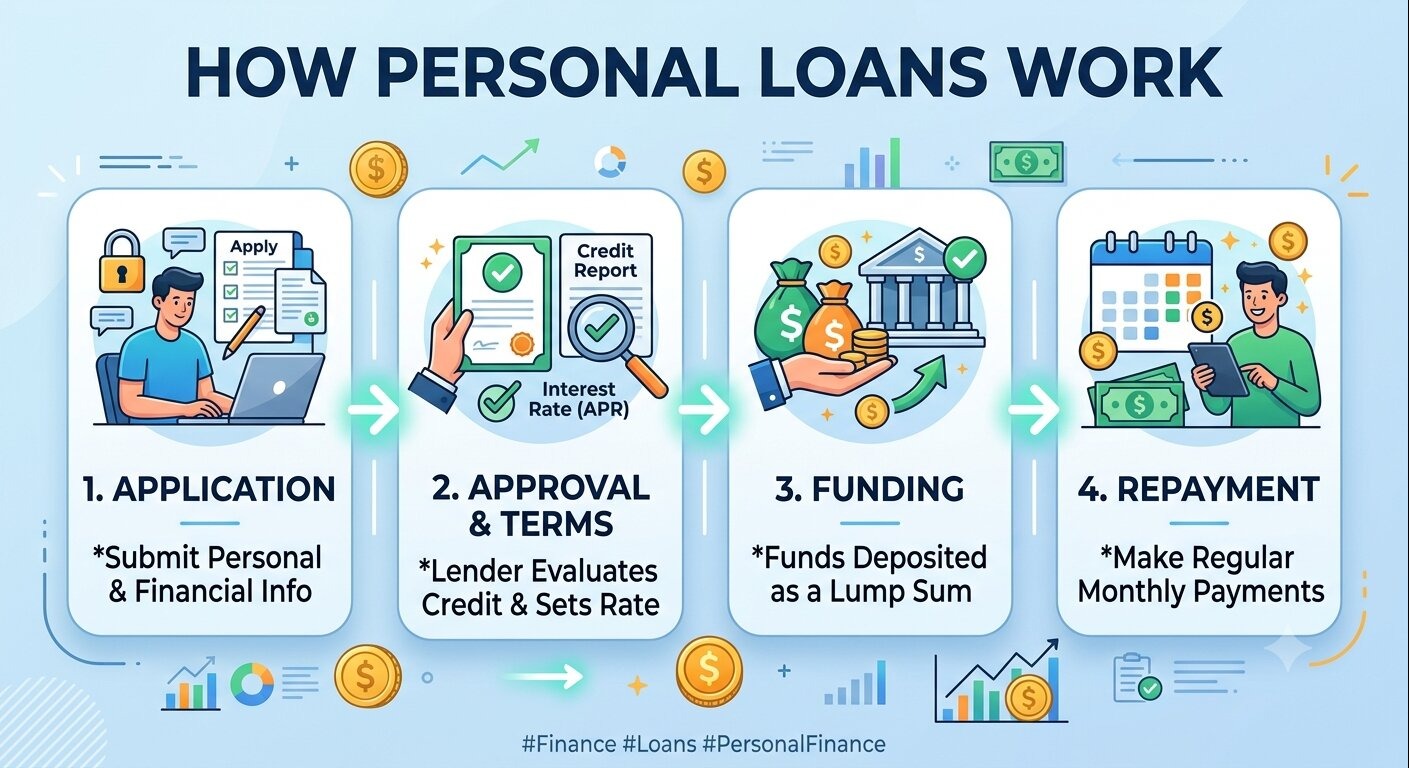
The process is fairly straightforward.
Step 1: Apply for the Loan
You submit an application with information such as:
- Income
- Employment details
- Credit history
- Existing debts
- Requested loan amount
Many lenders allow you to check estimated rates without affecting your credit score.
Step 2: Approval
The lender reviews your financial information and determines:
- Whether you qualify
- The maximum amount you can borrow
- Your interest rate
- Your repayment period
Applicants with higher credit scores generally receive lower interest rates.
Learn more in Loan Approval Factors Explained:
https://statush.com/credit-score-debt/loan-approval-factors-explained
Step 3: Receive Your Money
After approval, the lender deposits the loan amount directly into your bank account. Some lenders fund loans within one business day, while others may take several days.
Step 4: Repay the Loan
You'll make fixed monthly payments until the balance is fully repaid. Each payment includes:
- Principal (the amount borrowed)
- Interest (the lender's fee for lending money)
Over time, your remaining balance gradually decreases.
For a deeper understanding, read Loan Amortization Explained:
https://statush.com/credit-score-debt/loan-amortization-explained
Common Uses for Personal Loans
Personal loans can be used for many financial goals.
Some of the most common include:
- Debt consolidation
- Medical expenses
- Home renovations
- Wedding expenses
- Moving costs
- Emergency repairs
- Vacation financing
- Large purchases
Because lenders usually don't restrict how you spend the money, personal loans offer more flexibility than many other loan types.
Real-World Example
Imagine David has accumulated three credit card balances totaling $15,000. Each card charges interest rates above 22%, making it difficult to reduce the debt.
He qualifies for a personal loan with a much lower interest rate and uses the loan to pay off all three credit cards. Instead of managing multiple due dates and high-interest payments, he now has one predictable monthly payment.
This approach can simplify finances and potentially reduce the total interest paid over time.
If you're considering this strategy, read Best Strategies to Manage Multiple Loans:
https://statush.com/credit-score-debt/best-strategies-to-manage-multiple-loans
What Determines Your Interest Rate?
Several factors influence the interest rate you'll receive.
These include:
- Credit score
- Credit history
- Income level
- Debt-to-income ratio
- Employment stability
- Loan amount
- Repayment term
Borrowers with strong financial profiles usually qualify for the lowest rates.
To understand one important factor, read How Debt-to-Income Ratio Affects Loans:
https://statush.com/credit-score-debt/how-debt-to-income-ratio-affects-loans
Fixed vs Variable Rates
Most personal loans come with fixed interest rates.
That means:
- Your monthly payment stays the same.
- Budgeting becomes easier.
- Interest costs are predictable.
Some lenders also offer variable-rate loans, where the interest rate may increase or decrease over time.
Learn the differences in Fixed vs Variable Interest Rates:
https://statush.com/credit-score-debt/fixed-vs-variable-interest-rates
Advantages of Personal Loans
Personal loans offer several benefits.
- Fixed monthly payments
- Fast funding
- Flexible use of funds
- No collateral for most loans
- Can help consolidate expensive debt
- May improve credit mix when managed responsibly
For borrowers who have a clear repayment plan, personal loans can be an affordable financing option.
Potential Drawbacks
Personal loans also have disadvantages.
- Higher rates than secured loans
- Possible origination fees
- Credit score requirements
- Monthly payment obligations
- Missed payments can hurt your credit
It's important to compare offers from multiple lenders before accepting a loan.
Read Loan Origination Fees Explained:
https://statush.com/credit-score-debt/loan-origination-fees-explained
Tips Before Applying
A little preparation can improve your chances of getting approved.
Consider these practical tips:
- Check your credit report for errors.
- Improve your credit score if possible.
- Pay down existing debt.
- Borrow only what you actually need.
- Compare interest rates from several lenders.
- Read all loan terms carefully.
- Understand any fees before signing.
Even a small difference in interest rates can save hundreds of dollars over the life of the loan.
Mistakes to Avoid
Many borrowers run into trouble by making avoidable mistakes.
Try to avoid:
- Borrowing more than necessary
- Ignoring fees and penalties
- Missing monthly payments
- Choosing the longest term without considering total interest
- Using loans for unnecessary purchases
- Applying with multiple lenders at the same time without researching options
Responsible borrowing starts with understanding exactly what you're agreeing to repay.
Is a Personal Loan Right for You?
A personal loan may be a good choice if you need a predictable repayment schedule and have a clear purpose for borrowing. It works especially well for consolidating high-interest debt, financing planned expenses, or covering emergencies when you have a realistic repayment plan.
On the other hand, if you're borrowing for discretionary spending or already struggling with debt, it may be worth exploring alternatives before taking on another financial obligation.
Final Thoughts
Personal loans are among the most versatile borrowing tools available in the United States. They offer flexibility, fixed repayment schedules, and quick access to funds for a wide range of financial needs.
Before applying, compare lenders, understand the total borrowing cost—not just the monthly payment—and borrow only what fits comfortably within your budget. Making informed decisions today can help you save money and maintain a healthier financial future.
For your next step, consider learning How Interest Works on Loans, How to Calculate Loan Payments, and How to Qualify for a Personal Loan to better understand the complete borrowing process.
Internal Reading:
- How Interest Works on Loans
https://statush.com/credit-score-debt/how-interest-works-on-loans - How to Calculate Loan Payments
https://statush.com/credit-score-debt/how-to-calculate-loan-payments - How to Qualify for a Personal Loan
https://statush.com/credit-score-debt/how-to-qualify-for-a-personal-loan