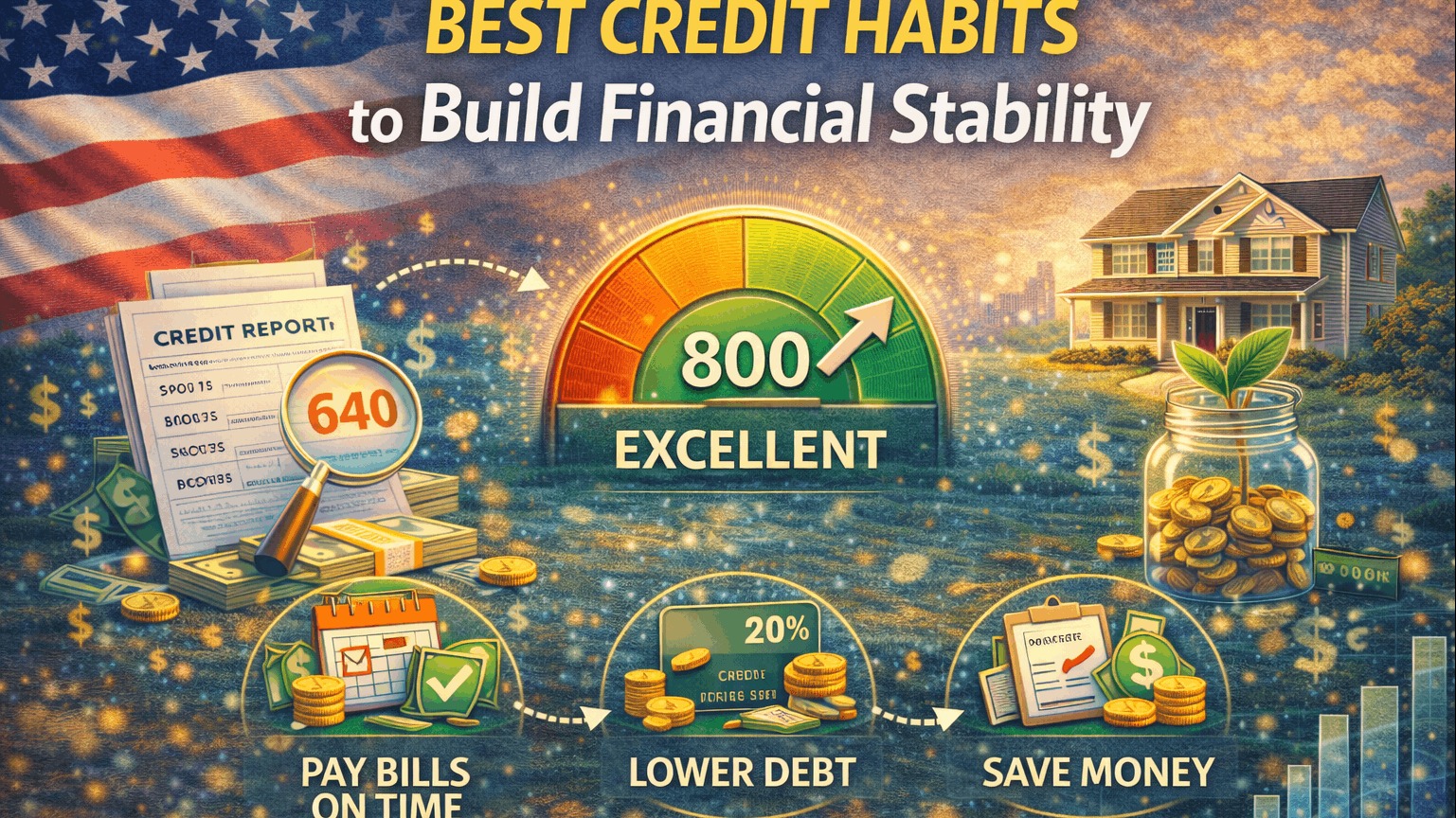
In 2026, credit is no longer just about a three-digit number; it is a "financial resume" that lenders, landlords, and even insurance companies use to judge your stability. With the widespread adoption of FICO 10T and VantageScore 4.0, the way your habits are tracked has changed. Lenders now look at "trended data"—meaning they don't just see what you owe today, but whether your balances have been growing or shrinking over the last 24 months.
Building financial stability requires moving beyond "paying bills on time" and into high-level credit management.
1. The "Safety Net" Habit: Automate the Minimums
Even the most organized people can have a chaotic month. In 2026, a single late payment (30+ days) can stay on your report for 7 years and instantly tank a 780 score by 100 points.
- The Habit: Set up "Safety Net Autopay" for the minimum amount due on every card.
- Why it works: This ensures you never miss a due date, even if you forget to manually pay the full balance. You can always log in later to pay the rest, but your "Perfect Payment History" (35% of your score) remains protected.
2. The "Single-Digit" Utilization Rule
While old advice said to keep utilization under 30%, 2026 data shows that consumers with "Exceptional" scores (800+) typically keep their utilization in the 1% to 9% range.
- The Habit: Pay your balance before the Statement Closing Date, not just the Due Date.
- The Move: If you have a $10,000 limit and spend $3,000, your statement will report 30% utilization. If you pay $2,500 two days before the statement closes, it reports only 5%—instantly making you look more stable to the algorithms.
3. Leverage "Alternative" Data (The 2026 Boost)
Newer models now incorporate "permissioned data" that wasn't previously part of your score.
- The Habit: Opt-in to services like Experian Boost or UltraFICO to include your on-time rent, utility, and streaming service payments.
- The Impact: For those with "thin" credit files, this can add 10 to 20 points almost overnight by proving consistent payment behavior outside of traditional debt.
4. The "Long-Term Anchor" Strategy
The "Length of Credit History" accounts for 15% of your score. In a world of "Buy Now, Pay Later" (BNPL) and quick-churn cards, longevity is a sign of deep stability.
- The Habit: Keep your oldest credit card active, even if you don't use it for daily spending.
- The Strategy: Put one small, recurring subscription (like Netflix) on your oldest card and set it to autopay. This keeps the account "active" so the bank doesn't close it for inactivity, preserving your average account age.
5. Defensive Credit Habits: The 2026 Security Suite
With the rise of AI-driven identity theft in 2026, stability also means protection.
- The Habit: Keep your credit files Frozen at all three bureaus (Equifax, Experian, TransUnion).
- The Move: Only "thaw" your credit when you are actively applying for a loan. This prevents unauthorized accounts from being opened in your name, which can take months of stress to resolve.