I understand a ship to be made
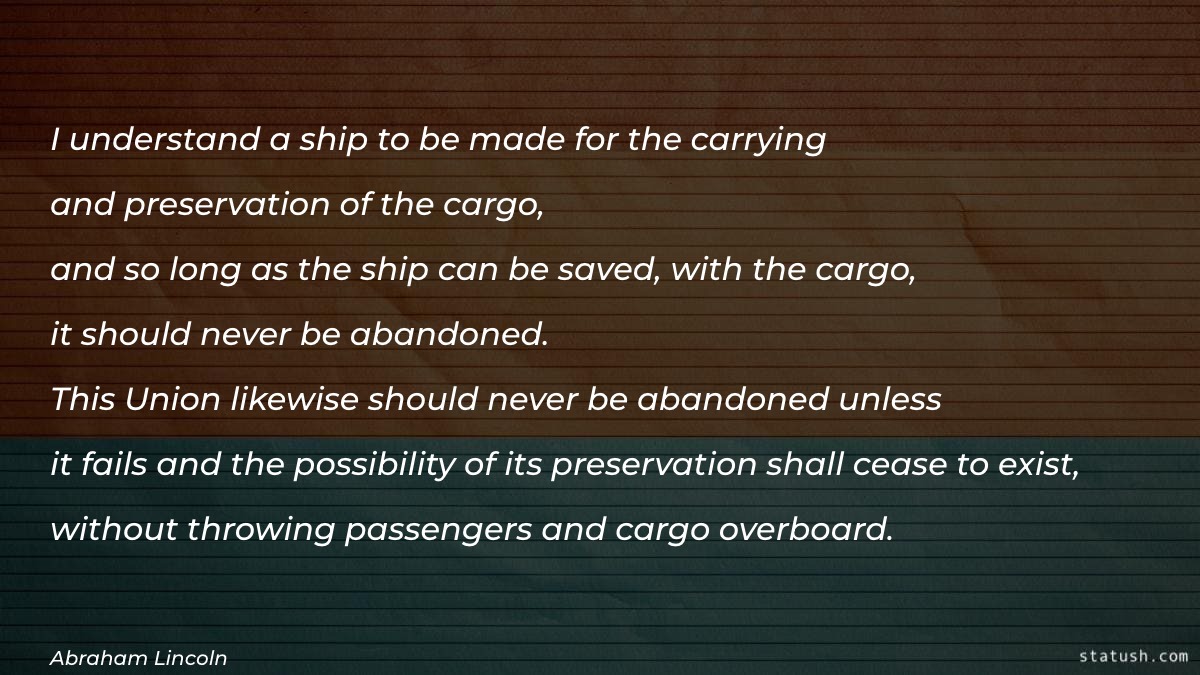
Meaning
About Author

Abraham Lincoln
Abraham Lincoln, the 16th President of the United States, is celebrated as one of America’s greatest leaders. He guided the nation through the Civil War, preserved the Union, and abolished slavery with the Emancipation Proclamation. Known for his humility, wisdom, and unshakable principles, Lincoln’s speeches and writings remain iconic for their eloquence and moral insight. His quotes often reflect perseverance, justice, empathy, and leadership in adversity. Lincoln’s ability to unite a divided nation and his commitment to equality continue to inspire leaders, citizens, and thinkers worldwide. Beyond politics, his reflections on human nature, integrity, and courage offer timeless lessons on character and resilience. Lincoln’s words serve as guidance for personal growth, moral decision-making, and the pursuit of justice, making him a source of inspiration for generations seeking wisdom and ethical leadership.
Related Quotes
“ Upon the subjects of which I have treated, I have spoken as I have thought. I may be wrong in regard to any or all of them; but, holding it a sound maxim that it is better only sometimes to be right than at all times to be wrong, so soon as I discover my opinions to be erroneous, I shall be ready to renounce them. ”
“ If the people of Utah shall peacefully form a State Constitution tolerating polygamy, will the Democracy admit them into the Union? ”
“ It has so happened in all ages of the world that some have labored, and others have, without labor, enjoyed a large proportion of the fruits. ”