Most investors spend a lot of time thinking about returns.
Far fewer spend enough time thinking about taxes.
That’s a mistake because taxes can quietly reduce investment gains year after year. Two investors may earn similar returns before taxes but end up with very different long-term results depending on how tax-efficient their strategies are.
And honestly, this is one of the less exciting parts of investing, which is probably why many people ignore it. But over long periods, tax efficiency can make a surprisingly large difference in wealth building.
The goal of tax-efficient investing is simple:
Keep more of your investment returns instead of unnecessarily losing them to taxes.
What Is Tax-Efficient Investing?
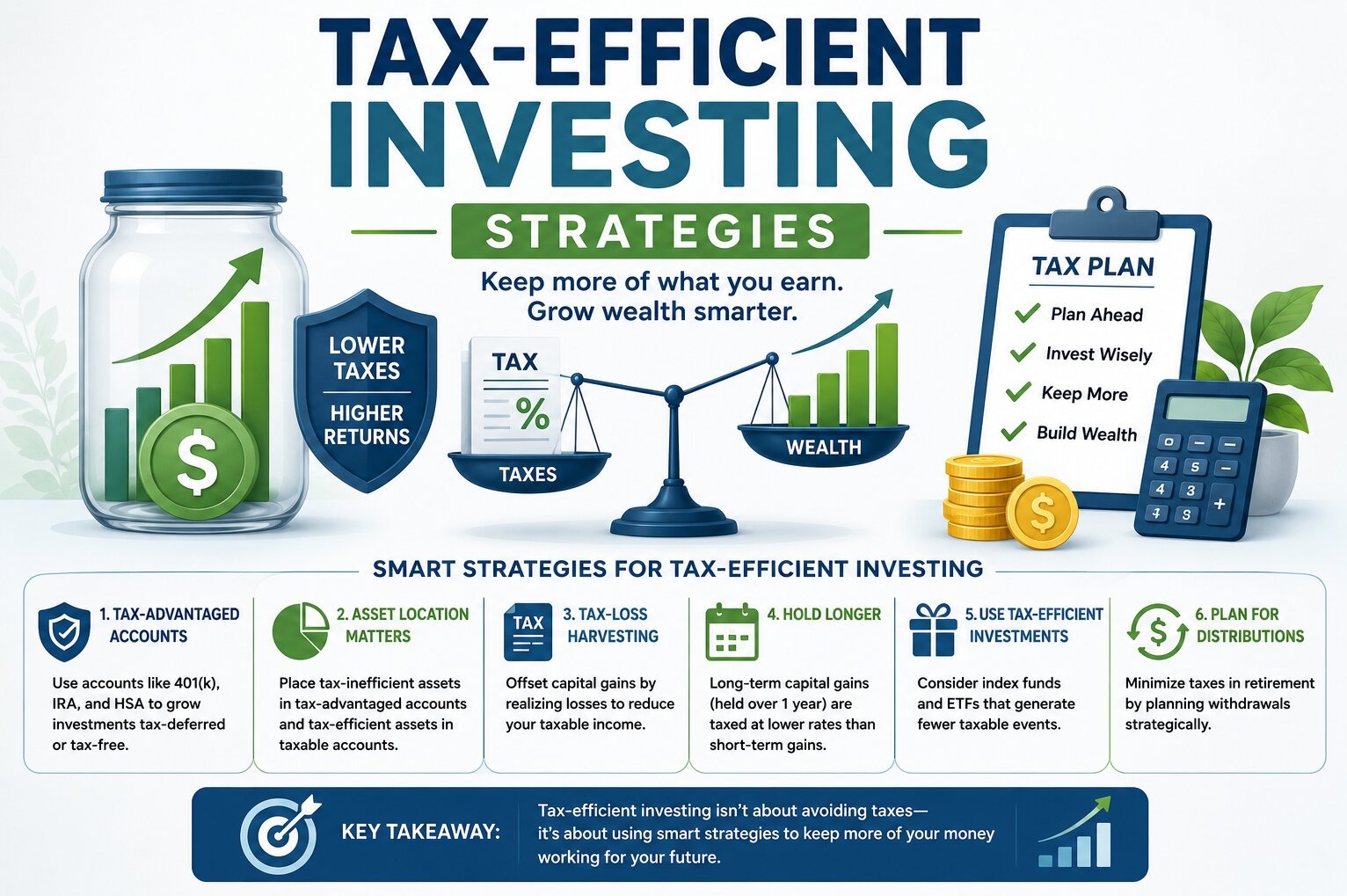
Tax-efficient investing involves structuring investments in ways that legally minimize taxes while supporting long-term financial goals.
This can include:
- Holding investments longer
- Using tax-advantaged accounts
- Managing capital gains carefully
- Choosing tax-efficient investment vehicles
- Reducing unnecessary trading
The idea is not tax avoidance or complicated loopholes.
It’s simply making smarter decisions that improve after-tax returns.
Why Tax Efficiency Matters
Investment taxes may seem small initially, but they compound over time.
Imagine two investors earning identical market returns:
| Investor | Annual Return | Taxes Paid | After-Tax Growth |
|---|---|---|---|
| Investor A | 10% | High yearly taxes | Slower compounding |
| Investor B | 10% | Lower tax burden | Faster compounding |
Over decades, even modest tax savings can grow into substantial differences in portfolio value.
This becomes especially important for:
- High-income earners
- Active traders
- Long-term investors
- Retirees relying on investments
Hold Investments Long Term
One of the simplest tax-efficient strategies is holding investments longer.
In many countries, long-term capital gains receive lower tax treatment than short-term gains.
You can explore this further in Long-Term vs Short-Term Capital Gains Explained.
Why Long-Term Holding Helps
Long-term investing may:
- Reduce tax rates
- Lower transaction costs
- Minimize emotional trading
- Improve compounding
Frequent buying and selling often creates unnecessary taxable events.
That’s one reason many successful investors prefer patience over constant trading.
Use Tax-Advantaged Accounts
Many countries offer investment accounts with special tax benefits.
Depending on local laws, these accounts may provide:
- Tax-deferred growth
- Tax-free withdrawals
- Reduced taxable income
These accounts can dramatically improve long-term wealth accumulation.
Benefits of Tax-Advantaged Accounts
| Benefit | Why It Matters |
|---|---|
| Tax deferral | Investments compound longer |
| Tax-free growth | More efficient long-term returns |
| Lower taxable income | Potential current-year tax savings |
For long-term retirement investing, these accounts are often extremely valuable.
Prioritize Tax-Efficient Investments
Some investments naturally generate fewer taxable events than others.
Generally More Tax-Efficient
- Index funds
- ETFs
- Long-term stock holdings
Generally Less Tax-Efficient
- High-turnover mutual funds
- Frequent trading strategies
- Investments generating heavy short-term gains
Index funds and passive ETFs often create fewer taxable transactions because they trade less frequently internally.
This connects closely with concepts discussed in Passive vs Active Investing Strategies.
Understand Dividend Taxes
Dividends can create taxable income even if you never sell your investments.
Some dividends receive favorable tax treatment, while others may be taxed as ordinary income depending on local regulations.
Investors focused heavily on dividend income should understand:
- Dividend tax rates
- Qualified vs non-qualified dividends
- After-tax income impact
You can learn more about dividend sustainability in Dividend Payout Ratio Explained.
Tax-Loss Harvesting Explained
Tax-loss harvesting involves selling losing investments to offset taxable gains.
Simple Example
| Investment | Gain/Loss |
|---|---|
| Stock A | +$8,000 |
| Stock B | -$3,000 |
Net taxable gain becomes:
Net\ Taxable\ Gain = 8000 - 3000 = 5000
This strategy can reduce current-year tax obligations.
However, investors should avoid selling solely for tax reasons if it harms long-term investment quality.
Avoid Excessive Trading
Frequent trading creates several tax problems:
- More short-term capital gains
- Higher transaction costs
- More taxable events
- Increased emotional decision-making
Many active traders underestimate how much taxes reduce actual profits.
Even successful short-term trading strategies may underperform after accounting for taxes and fees.
Asset Location Strategy
Asset location refers to placing investments in the most tax-efficient account types.
For example:
- Tax-inefficient investments may fit better inside tax-advantaged accounts
- Tax-efficient investments may work fine in taxable accounts
This strategy helps optimize overall portfolio efficiency.
While beginners often focus entirely on asset allocation, asset location also matters over long periods.
Reinvest Dividends Carefully
Dividend reinvestment helps compound wealth, but investors should still track taxes properly.
Reinvested dividends may still create taxable income even though cash was automatically reinvested.
Good recordkeeping matters here.
Be Careful With Mutual Fund Distributions
Some mutual funds distribute capital gains annually even if investors never sold shares personally.
This can surprise newer investors.
Funds with high turnover may generate:
- More taxable distributions
- Larger annual tax bills
This is one reason tax-conscious investors often prefer lower-turnover funds or ETFs.
Municipal Bonds and Tax Advantages
In some countries, certain government or municipal bonds receive special tax treatment.
These bonds may provide:
- Reduced taxes
- Tax-free interest income
- Greater after-tax yield for higher earners
However, investors should still compare actual after-tax returns carefully rather than assuming tax-free automatically means better.
You can learn more about fixed-income investing in How to Invest in Bonds for Beginners.
Avoid Letting Taxes Control Every Decision
This is important.
Taxes matter, but they should not become the only factor driving investment choices.
For example:
- Holding a poor investment forever solely to avoid taxes may hurt long-term returns
- Refusing beneficial portfolio changes due to tax concerns can backfire
Investment quality still comes first.
Tax efficiency should support investment strategy — not completely replace it.
Real-World Example
Imagine two investors:
Investor A
- Trades frequently
- Generates constant short-term gains
- Pays high yearly taxes
- Uses no tax-advantaged accounts
Investor B
- Holds investments long term
- Uses tax-efficient funds
- Harvests losses strategically
- Minimizes unnecessary taxable events
Over decades, Investor B may accumulate significantly more wealth even with similar market returns.
That’s the hidden power of tax efficiency.
Tax Efficiency and Retirement Planning
Taxes become especially important near retirement.
Poor withdrawal planning can:
- Push investors into higher tax brackets
- Trigger unnecessary taxable events
- Reduce retirement income efficiency
Thoughtful retirement planning often includes:
- Diversified account types
- Gradual withdrawals
- Long-term tax management
Practical Tax-Efficient Investing Tips
| Strategy | Purpose |
|---|---|
| Hold investments long term | Lower capital gains taxes |
| Use tax-advantaged accounts | Improve compounding |
| Limit excessive trading | Reduce taxable events |
| Harvest losses strategically | Offset gains |
| Use low-turnover funds | Improve tax efficiency |
| Keep accurate records | Simplify reporting |
Common Mistakes Investors Make
Ignoring Taxes Completely
Many investors focus only on pre-tax returns.
Overtrading
Frequent trading often creates avoidable tax costs.
Poor Recordkeeping
Missing cost basis records can create tax reporting problems later.
Chasing Tax Benefits Alone
A tax benefit does not automatically make an investment good.
Long-Term Investing Usually Helps
Many tax-efficient strategies naturally align with long-term investing principles:
- Patience
- Lower turnover
- Reduced emotional trading
- Better compounding
This is one reason long-term disciplined investors often outperform more reactive investors after taxes are considered.
You can also combine these ideas with broader portfolio planning in How to Create a Passive Investment Portfolio.
Final Thoughts
Tax-efficient investing is not about avoiding taxes entirely. It’s about minimizing unnecessary tax drag so more of your money stays invested and compounding over time.
Simple strategies like:
- Holding investments longer
- Using tax-advantaged accounts
- Avoiding excessive trading
- Managing gains carefully
can significantly improve long-term after-tax returns.
And honestly, this is one of the quieter advantages successful investors build over time. They are not just focused on making money — they are focused on keeping more of it working for them year after year.